Local advice
What Southern Indiana weather asks of a roof
Freeze and thaw, summer storms, hail, and long humid stretches all work on a roof in different ways. Here is what that means for the one over your head.

Freeze and thaw
Our winters move back and forth across freezing rather than staying cold. Water gets into a gap, freezes, expands, and opens that gap a little wider — then does it again the next week.
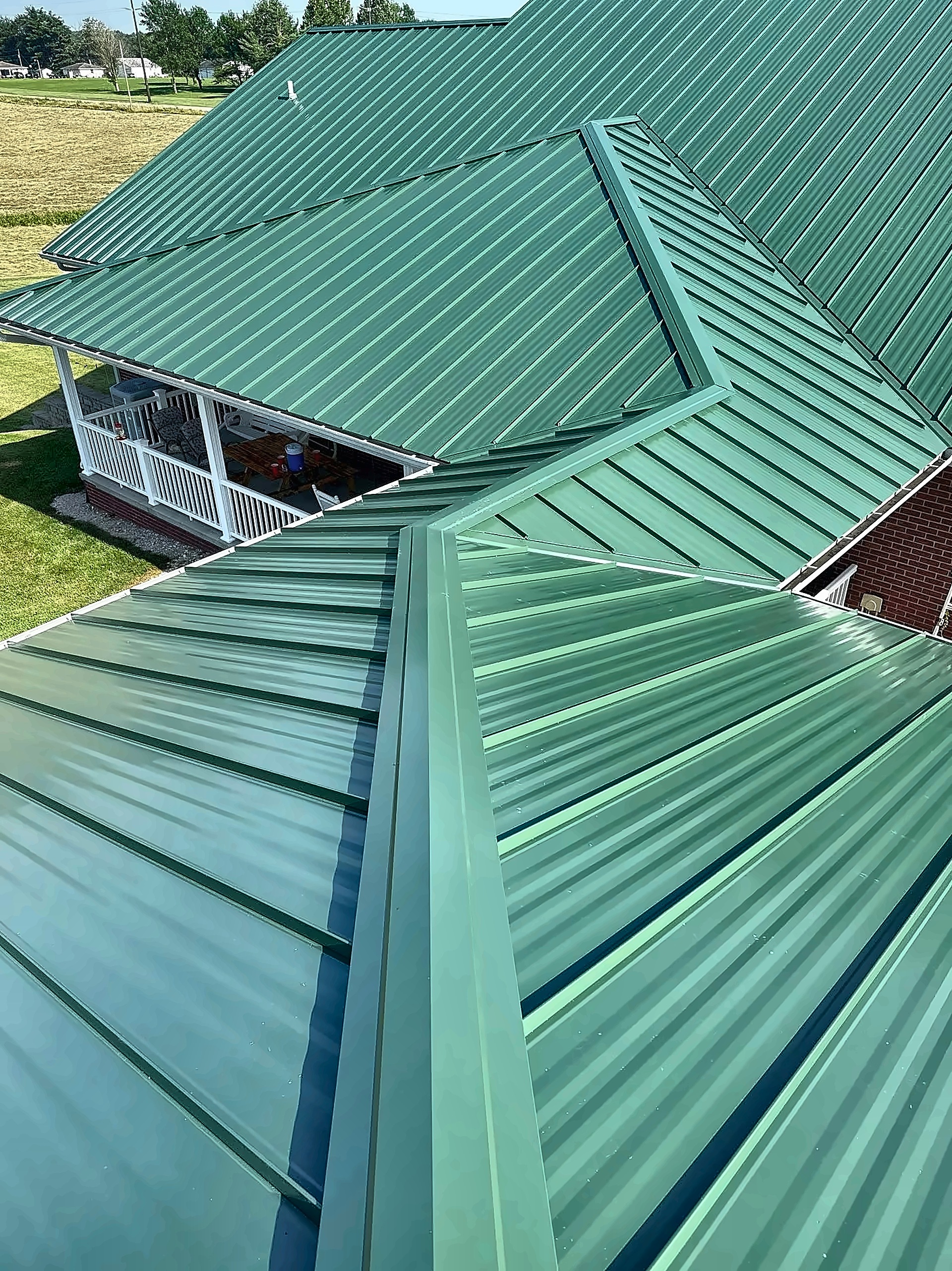
That cycle is hard on sealant, on loose trim, and on anywhere water sits instead of draining. It is one of the reasons we would rather form flashing to shed water than rely on a bead of caulk to hold it back.
Storms, wind, and hail
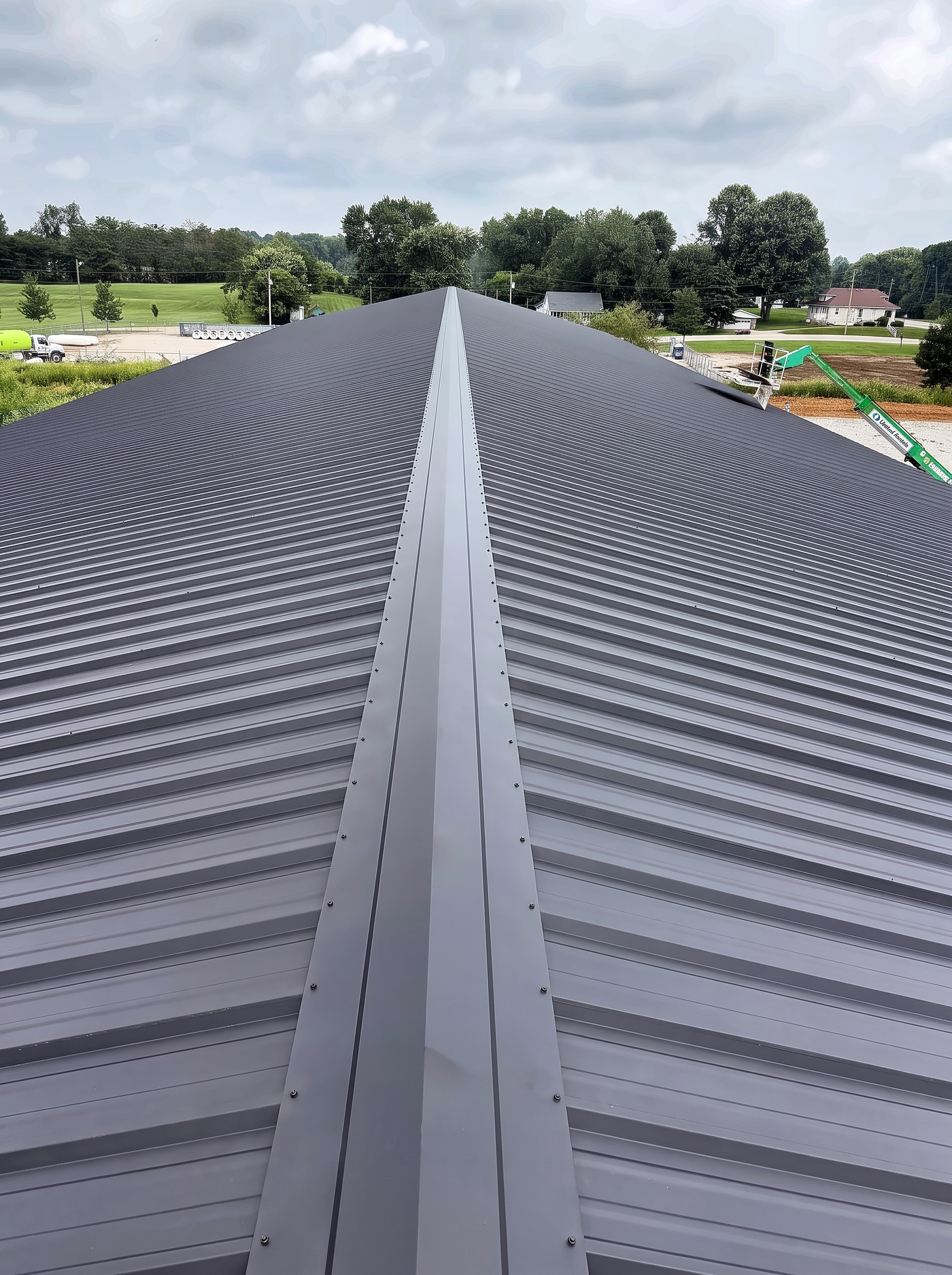
Spring and summer bring strong storms through Washington, Orange, and Harrison counties most years. Wind works at the edges of a roof first — the eave, the rake, the ridge — because that is where it can get underneath.
Hail damage is not always visible from the ground. If a storm was bad enough that you are wondering, it is worth having someone look, and worth documenting what is found in case a claim follows.
Heat, humidity, and what is underneath
Long humid summers make ventilation matter. A roof assembly that cannot breathe holds moisture, and moisture works on the deck underneath long before anything shows on the surface.
Metal handles the sun and the rain well, but the roof is a system. How it is fastened, how it is flashed, and how it is vented decide how it holds up here.
Two things worth doing
Keep gutters and valleys clear so water leaves the roof instead of sitting on it, and take a look after any severe storm. Small things caught early are inexpensive. The same things ignored for two years are not.